


For small businesses and startups, efficiently processing payroll can feel overwhelming. Business owners or managers often juggle multiple responsibilities, from managing hiring to calculating paychecks and tax withholding. However, with practical strategies for small business payroll in the US, managing payroll can be simplified, saving your team valuable time and reducing errors. Employing effective systems upfront allows entrepreneurs to stay compliant and focused on growth, rather than being bogged down by administrative headaches.
Payroll mistakes can result in employee dissatisfaction, financial penalties, and legal issues. Small businesses can implement proven strategies for effective payroll management to ensure compliance and maintain smooth operations. Establishing clear payroll routines, utilizing suitable software, and developing tailored processes are essential for accuracy and transparency. Additionally, staying informed about employment regulations and seeking professional advice can enhance payroll systems, thereby improving compliance and employee morale.
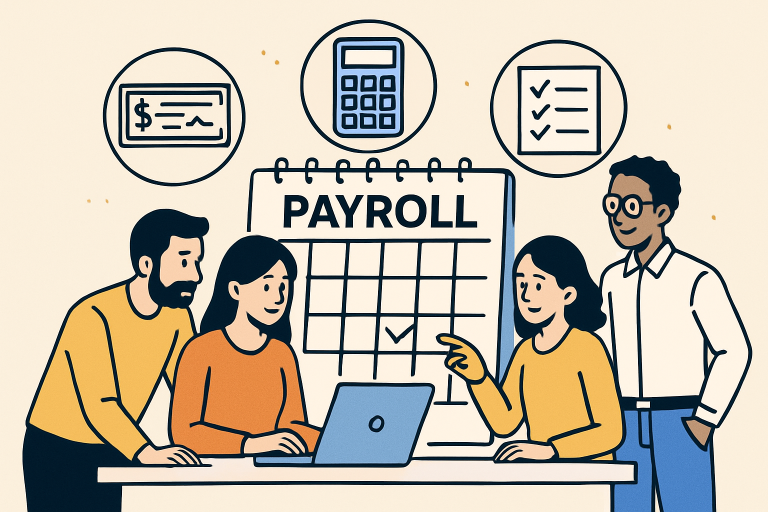
1. Create and Maintain a Payroll Calendar
Organizing payroll dates in advance is one of the simplest yet most effective actions you can take. A detailed payroll calendar outlines when payments are issued, deadlines for tax filings, and when employee time cards or hours need to be reviewed. This helps you avoid missed or late payments, which are among the most frequent sources of employee dissatisfaction.
Many payroll providers, including the General Services Administration (GSA), offer downloadable calendars you can tailor to your pay frequency. Sharing this calendar with your team increases transparency and sets clear payroll expectations.
2. Automate Payroll Taxes
Manual payroll tax calculations are not only tedious but also prone to significant errors. Small miscalculations can result in IRS penalties or back payments. Software solutions automate these calculations, ensure timely filings, and produce error-free paychecks. Leading payroll software also stays up to date with the latest tax regulations, which is essential because tax laws frequently change at the federal, state, and even local levels.
The IRS provides resources for employers aiming to understand and streamline payroll tax compliance. Consider integrating payroll automation early to save hours every pay period and reduce the risk of noncompliance. You can learn more from the IRS’s Public Employers’ Toolkit for a deeper overview.
3. Maintain Accurate Employee Records
Proper payroll processing depends on maintaining thorough and up-to-date employee records. Each employee file should include personal details, signed W-4 forms (or relevant tax documents for contractors), and any direct deposit information. Accuracy is key; mistakes in employee identification or benefit elections can lead to payment errors and regulatory complications.
Implement digital filing systems to improve the efficiency of storing, accessing, and updating employee records. Routine reviews and audits of these records will help catch discrepancies early and update required information, such as tax status or bank account changes.
4. Consider Outsourcing Payroll Functions
For owners with limited experience or time to dedicate to payroll, outsourcing can be a strategic move. Payroll providers manage core functions such as issuing paychecks, filing payroll taxes, and handling year-end documentation. This approach frees time to focus on business growth and customer relationships while ensuring security and compliance.
Choosing the right provider should involve assessing their data security measures, customer service reputation, and scalability as your business grows. Outsourcing is especially useful for businesses anticipating rapid team expansion or navigating complex, multi-state payroll needs.
5. Stay Compliant with Employment Laws
Small businesses are obligated to follow federal, state, and local employment laws, including wage requirements, overtime rules, and worker classification (employee vs. contractor). These laws are frequently updated, making it critical to stay up to date on regulatory changes that affect payroll.
Set regular review periods to ensure your payroll system reflects the most current employment laws. Embrace continuing education, legal updates, and newsletters from business law resources. Noncompliance, even if accidental, can result in audits, fines, or litigation.
6. Standardize Payroll Processes
Establishing written processes for all payroll activities ensures consistency and reduces errors. From onboarding new hires to recording hours and managing leave, standardized checklists help maintain uniformity. Regular internal audits can reveal inefficiencies or errors early, so you can correct them before they become costly problems.
Mapping out your payroll process also prepares your business to adapt quickly, whether you need to onboard a new employee or respond to changes in benefits requirements. Review these procedures yearly or when you change software or add team members.
7. Prioritize Data Security
Payroll records contain sensitive information. Protecting this data from breaches or unauthorized access should be a top priority. Use encrypted payroll software, restrict access to physical and digital records to only relevant personnel, and educate your team on cybersecurity best practices.
Update passwords regularly and implement multi-factor authentication where possible. Routinely patch and update payroll software to protect against new cybersecurity threats.
8. Communicate Clearly with Employees
Open communication about payroll calculations, deduction rules, and benefits not only builds trust but also prevents misunderstandings. Provide digital or paper pay stubs containing all relevant details and create a channel for employees to ask payroll questions or report issues without delay.
Regularly review your communications, such as handbooks, onboarding docs, and benefit guides, to ensure all payroll-related information is clear and up to date. An informed workforce contributes to a positive workplace culture and reduces the likelihood of payroll disputes.
Excellent payroll management is more than just issuing paychecks. By following a strategic, process-driven approach, small teams can ensure compliance, accuracy, and employee satisfaction, paving the way for business stability and growth.