
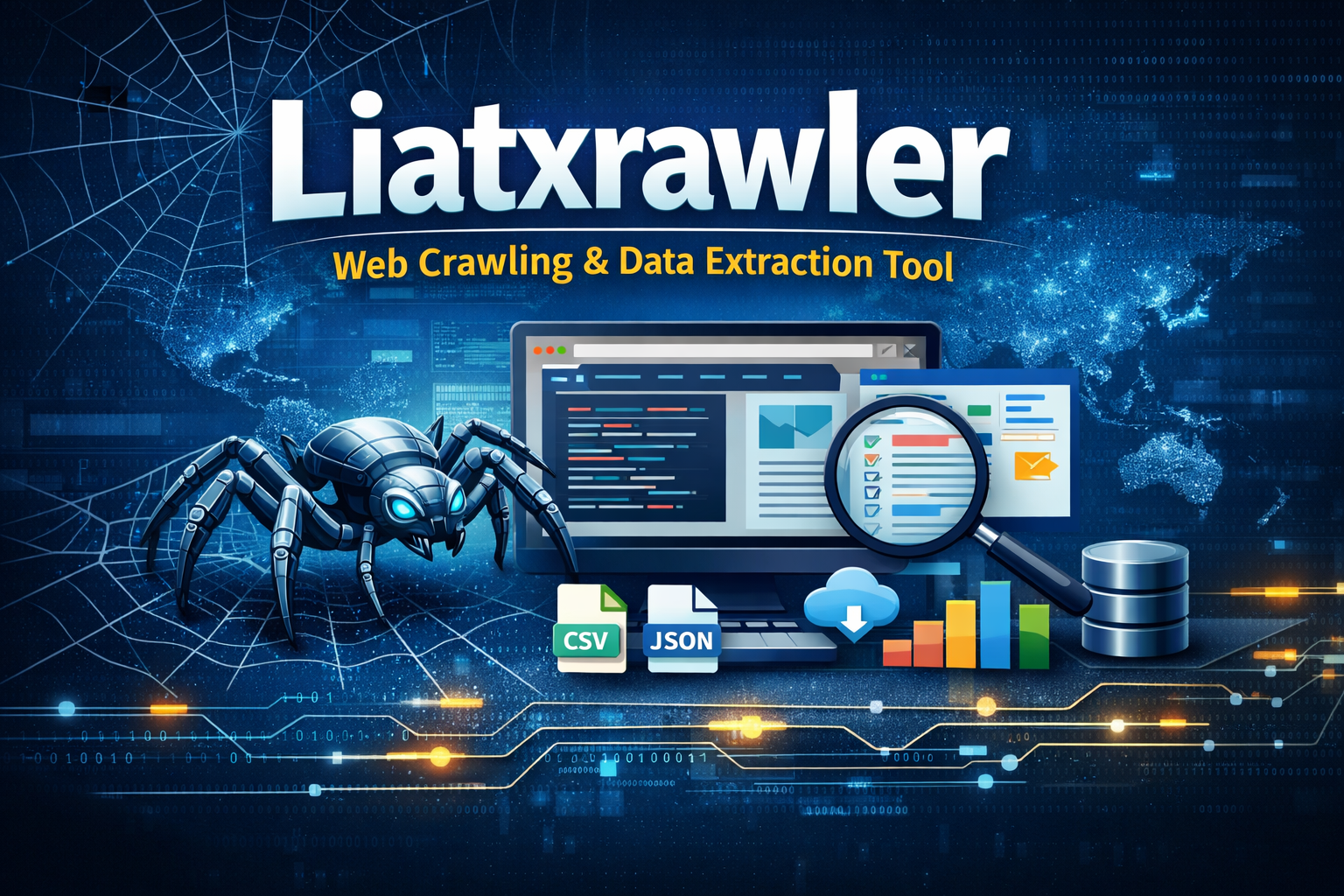

If you’re searching for information about Liatxrawler, you’re probably trying to understand what it actually is and why it keeps showing up in tech, marketing, and data-focused discussions. The short answer is this: Liatxrawler is a web crawling and data extraction tool designed to collect structured information from websites in an automated and efficient way.
Instead of manually browsing pages and copying data, Liatxrawler handles the heavy lifting by scanning websites, pulling relevant information, and organizing it into usable formats. In this article, I’ll explain what Liatxrawler does, how it works, where it’s commonly used, and what makes it useful for businesses, researchers, and digital professionals.
What Is Liatxrawler?
Liatxrawler is a modern web crawler that automatically visits web pages, follows links, and extracts specific data based on predefined rules. Unlike simple scraping tools that grab everything on a page, Liatxrawler focuses on precision and structure. You tell it what to look for—such as prices, headlines, product details, or metadata—and it collects only that information.
This makes it especially useful for people who need clean, organized data rather than raw HTML. Whether the goal is analysis, reporting, or automation, Liatxrawler helps turn scattered web content into meaningful datasets.
How Liatxrawler Works Behind the Scenes
While the technical side can be complex, the general process is easy to understand.
First, the user defines a target. This could be a website, a group of URLs, or even an entire domain. Next, extraction rules are set, telling the crawler what data points matter. These rules might focus on titles, prices, dates, descriptions, or other structured elements.
Once the crawl begins, Liatxrawler systematically visits pages and gathers the requested data. It then cleans and organizes the information so it’s consistent and usable. Finally, the data can be exported in common formats like CSV or JSON, or sent directly to a database or analytics tool.
This workflow allows large amounts of data to be collected quickly without constant manual oversight.
Key Features That Make Liatxrawler Stand Out
One reason Liatxrawler gets attention is because it balances power with usability.
It’s built to handle large volumes of data efficiently without putting unnecessary strain on systems. Users can customize crawling rules, control crawl speed, and manage how deep the crawler navigates through a website.
Another important feature is responsible crawling. Liatxrawler is designed to respect site rules, helping reduce the risk of overwhelming servers or violating access policies when configured correctly.
The ability to export data in multiple formats also makes it easy to integrate Liatxrawler into existing workflows, whether that’s spreadsheets, dashboards, or internal applications.
Common Use Cases for Liatxrawler
Liatxrawler is used across several industries because web data plays a major role in decision-making today.
E-commerce monitoring is one of the most popular uses. Businesses track competitor pricing, product availability, and new listings to stay competitive.
In SEO and digital marketing, professionals use crawling tools to analyze site structures, metadata, keyword usage, and content patterns. This helps improve visibility and performance in search results.
Market research teams rely on web crawlers to collect reviews, trends, and consumer feedback at scale. Instead of sampling a handful of sources, they can analyze thousands of data points.
Liatxrawler is also useful in academic and business research, where large datasets are needed for trend analysis, behavioral studies, or industry insights.
Benefits of Using Liatxrawler
From my experience working with automated data tools, the biggest advantage is time. Tasks that once took days can be completed in a fraction of the time.
Accuracy is another major benefit. Automated extraction reduces human error and ensures data consistency across large datasets.
Scalability matters too. Whether you’re collecting data from ten pages or ten thousand, Liatxrawler can scale with your needs.
There’s also a cost advantage. Automating data collection often costs less than manual research or recurring third-party data services, especially over the long term.
Challenges and Limitations to Consider
While Liatxrawler is powerful, it’s not without challenges.
Websites change layouts frequently, which means extraction rules may need regular updates. A crawler that worked perfectly last month might need adjustments today.
Legal and ethical considerations are also important. Not all websites allow crawling, and ignoring terms of service or privacy regulations can cause issues. Responsible configuration is essential.
Finally, data overload can be a problem. Without clear goals, it’s easy to collect more data than you actually need. A focused approach helps avoid unnecessary complexity.
Why Liatxrawler Matters Today
The internet is one of the largest data sources in the world, but most of that information isn’t immediately usable. Tools like Liatxrawler help bridge the gap between raw web content and actionable insights.
By automating data collection, it allows businesses and individuals to spend less time gathering information and more time analyzing and applying it. That shift can make a real difference in productivity and decision-making.
Final Thoughts
Liatxrawler is best described as a practical solution for modern web data collection. It’s designed for people who need reliable, structured information without the burden of manual work. When used responsibly and with clear objectives, it can be a valuable tool across many industries.
If you found this article informative, feel free to check out our other articles as well.
FAQs About Liatxrawler
What is Liatxrawler used for?
Liatxrawler is used to crawl websites and extract structured data such as prices, content details, metadata, and listings.
Is Liatxrawler suitable for beginners?
Yes, with basic setup knowledge, beginners can start small and gradually expand their use as they gain experience.
Can Liatxrawler handle large websites?
It is designed to scale and can handle large websites when properly configured.
Is web crawling with Liatxrawler legal?
It depends on how and where it’s used. Users should always respect website policies and applicable laws.
What types of data can Liatxrawler collect?
It can collect text, structured fields, metadata, and other page-level information depending on configuration.